





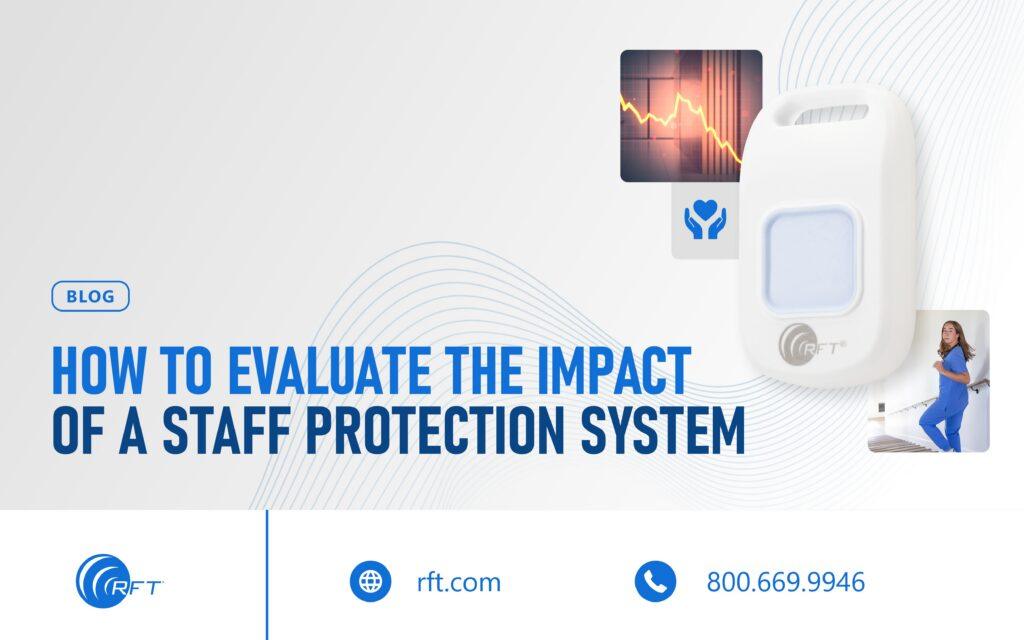
When a healthcare worker faces a threatening or violent situation, every second matters.
Imagine a nurse is confronted by an aggressive visitor during a late-night shift. She discreetly activates her staff duress device. Within seconds, the alert reaches security, and responders know where she is and can move toward her location.
That is what a staff protection system is designed to do.
But here’s the question hospitals should be asking:
How do you know your staff protection system is actually working?
Purchasing wearable panic buttons or staff duress devices is only the beginning. The real measure of a successful staff protection program is what happens after someone presses that button—how quickly the alert reaches the right people, how accurately the employee can be located, and how quickly help arrives.
With workplace violence continuing to be a serious concern in healthcare, hospitals need to evaluate staff protection systems using measurable results rather than simply counting the number of devices deployed.
According to National Nurses United, workplace violence continues to affect nurses across the country, reinforcing the need for healthcare organizations to strengthen prevention and response programs.
So, what should hospitals measure?
1. Start With Response Time
The most important question is simple:
How long does it take for help to reach a staff member after an alert is activated?
Don’t stop at the time it takes to transmit an alert.
A meaningful response-time measurement should include at least two stages:
- Alert activation to alert acknowledgment
- Alert activation to responder arrival
A system may send an alert almost instantly, but that doesn’t necessarily mean the employee is protected. If security receives the notification but cannot determine exactly where the employee is, valuable time can still be lost.
This is where location accuracy becomes critical.
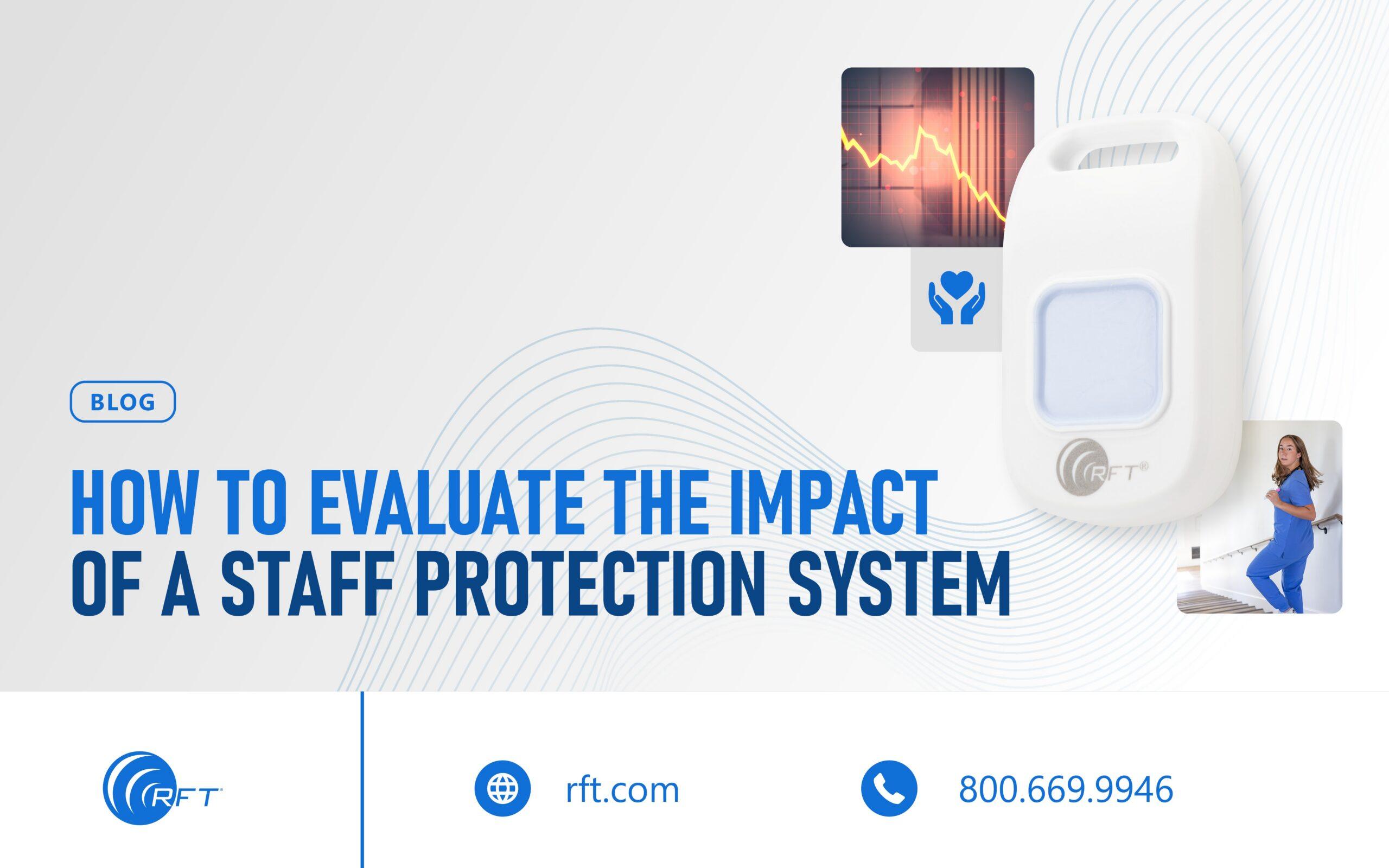
For example, RF Technologies’ Help Alert® Staff Protection is designed to provide rapid staff duress notification along with location information so responders can identify where assistance is needed.
According to RF Technologies, Help Alert alerts can reach security within approximately 2–3 seconds after activation.
But hospitals should go further than a vendor’s stated transmission time.
Measure your actual response time.
Track the average response time, but also look at the 90th or 95th percentile. An average can hide occasional but potentially dangerous delays.
Metrics to track include:
- Average alert-to-acknowledgment time
- 90th-percentile response time
- Alert-to-responder-arrival time
- Location accuracy
- Response time by department and shift
If you’re only measuring how quickly an alert is sent, you’re measuring only half of the system.
2. Look at Location Accuracy
Imagine security receives an alert that says a staff member needs help somewhere on the third floor.
Now imagine the alert identifies the exact room.
Those two scenarios can lead to very different response times.
Location accuracy should therefore be a major part of any staff protection evaluation.
Hospitals should test their system in the areas where employees may be most vulnerable, including:
- Patient rooms
- Emergency departments
- Behavioral health areas
- Hallways
- Stairwells
- Elevators
- Parking areas
- Outdoor walkways
- Other isolated locations
Don’t rely solely on a demonstration in an open indoor hallway.
Test the system throughout the actual facility.
Solutions such as RF Technologies’ Help Alert combine staff duress capabilities with real-time location technology designed to help security teams identify an employee’s location when an alert is activated.
The key question for any hospital, however, is not simply “Does the vendor offer location technology?”
It’s:
“How accurately can responders locate our employees in our facility?”
3. Measure Staff Adoption, Not Just Device Deployment
A hospital can purchase hundreds of staff protection devices, but that doesn’t mean hundreds of employees are actually using them.
Staff adoption is one of the easiest metrics to overlook.
Employees may avoid wearing or carrying a device because it is uncomfortable, difficult to access, interferes with their workflow, or because they aren’t confident that activating it will result in a meaningful response.
Hospitals can monitor:
- Percentage of assigned staff carrying their device
- Device usage by department
- Battery and device availability
- Training completion
- Staff knowledge of activation procedures
- Employee confidence in the response process
- Reasons employees don’t consistently carry their device
Discreet activation can also encourage staff adoption during an escalating encounter. A staff member may need to request assistance without escalating the situation.
For example, RF Technologies’ Help Alert pendant is designed for discreet activation and provides feedback to the employee when an alert has been transmitted and acknowledged.
Ultimately, the best technology is the technology employees are comfortable using when they actually need it.
4. Compare System Alerts With Incident Reports
A reduction in incident reports doesn’t automatically mean workplace violence has decreased.
Why?
Because not every incident gets reported.
The Occupational Safety and Health Administration (OSHA) recognizes underreporting as a challenge in addressing workplace violence in healthcare. Employees may not report incidents because they consider them part of the job, don’t know how to report them, or don’t believe reporting will lead to meaningful action.
Hospitals can compare technology data with employee feedback.
For example:
Technology data
- Number of duress activations
- Alert locations
- Response times
- Time and date of alerts
- Departments generating the most alerts
Employee feedback
- Number of threatening incidents experienced
- Whether employees reported those incidents
- Whether employees know how to activate the system
- Whether employees trust the response process
- Why an employee might choose not to activate the device
If employees report frequent threatening encounters but system activations remain extremely low, that difference deserves investigation.
It could indicate a training issue.
It could indicate a usability issue.
Or it could indicate that employees don’t have confidence in the response process.
The data should help hospitals identify the reason rather than assuming fewer alerts automatically means fewer incidents.
5. Test the System During a Network Outage
Here’s a question every hospital should ask before selecting or evaluating a staff protection system:
What happens if the hospital’s network goes down?
Hospitals depend heavily on digital infrastructure, but a staff protection system is a safety technology. Its reliability should be evaluated separately from normal IT availability.
Ask vendors:
- Does the system depend on hospital Wi-Fi?
- What happens during a network outage?
- Does location functionality continue?
- What happens during planned IT maintenance?
- Is there an independent communication infrastructure?
- Can alerts still reach responders if part of the hospital network is unavailable?
For example, RF Technologies states that Help Alert operates independently of hospital Wi-Fi, using its own wireless infrastructure for staff protection communications.
Regardless of which technology a hospital selects, the best way to evaluate reliability is to test it.
Conduct controlled simulations.
Turn off the relevant network infrastructure where safely possible and determine whether alerts are still delivered and location information remains available.
If nobody knows what happens during an outage, that is something worth finding out before an actual emergency occurs.
6. Position Staff Protection as a De-Escalation Tool, Not Just a Response Tool
A staff duress system shouldn’t operate as an isolated technology purchase, and it shouldn’t be thought of only as a response tool for when something has already gone wrong.
It should contribute to the hospital’s broader workplace violence prevention strategy — starting before an incident occurs, not just after.
The Joint Commission’s workplace violence prevention requirements emphasize areas including reporting, staff training, workplace analysis, and ongoing evaluation.
Staff protection technology can contribute to those efforts in two ways. The first is preventive: staff who know backup is one press away tend to approach tense situations with more composure, and a visible, trusted duress system can itself help de-escalate a moment before it goes further. The second is informational: incident and alert data, reviewed over time, can help hospitals identify
- Departments with recurring incidents
- High-risk locations
- Patterns by shift or time of day
- Response delays
- Training opportunities
- Repeated false alarms
- Areas where additional security coverage may be needed
This turns a staff protection system from a simple emergency button into a source of actionable safety information — and a standing part of the hospital’s de-escalation toolkit, alongside verbal de-escalation training and team response protocols.
The goal goes beyond responding faster to the next incident. It’s to use what today’s alerts and near-misses reveal to help prevent tomorrow’s, and to reinforce the everyday behaviors that keep tension from escalating in the first place.
7. Build the Financial Case Around Your Own Data
Safety is the priority, but hospital leaders are also analyzing the financial impact of workplace violence.
The costs can extend well beyond medical treatment or workers’ compensation.
Consider:
- Employee turnover
- Recruitment and onboarding
- Overtime
- Temporary staffing
- Lost productivity
- Workers’ compensation
- Legal expenses
- Incident investigation
- Training and replacement costs
The CDC’s National Institute for Occupational Safety and Health (NIOSH) identifies workplace violence as an important occupational safety issue in healthcare and recommends comprehensive prevention approaches.
Rather than relying entirely on industry-wide estimates, hospitals should calculate their own baseline.
For example:
Annual workplace violence cost = turnover + lost work time + workers’ compensation + overtime + other incident-related costs
Then compare that figure with the total cost of the staff protection program.
Some ROI models, including those published by RF Technologies, use factors such as turnover, injury costs, and safety-program investment to estimate potential financial benefits.
Those models can be useful starting points, but your organization’s actual numbers will produce a clearer view.
8. Define What a Culture of Safety Actually Looks Like in Practice
A strong culture of safety isn’t a slogan on a poster, it’s a set of everyday behaviors that determine whether staff feel supported enough to speak up and act.
So, how do you know your staff protection system is actually working? Your culture and your team’s actions will tell you whether staff feel genuinely supported enough to rely on the system.
The strongest hospitals treat all three as connected: a compliant program, a well-performing system, and a workforce culture that trusts the system. Evaluating impact means asking not just “did the system work when tested” but “do our employees feel confident it will work for them,” because that confidence is what turns a good system into one that actually protects people and impacts the culture of safety.