






Workplace violence in healthcare is a safety issue first. It is also a financial one, and hospital leaders need both sides of the picture when they plan a staff protection investment.
The American Hospital Association (AHA) estimates that violence cost U.S. hospitals $18.27 billion in 2023. That national figure is a useful context. But it doesn’t tell a CFO, CNO or security director what workplace violence costs their own facility, or what return a staff protection system could deliver.
This guide breaks down where the costs come from and shows a simple way to estimate staff protection ROI, using the same inputs as the Help Alert® ROI Calculator.
What Workplace Violence Costs U.S. Hospitals
The AHA report, The Burden of Violence to U.S. Hospitals, was prepared by the Harborview Injury and Prevention Research Center at the University of Washington School of Medicine. It covers violence in hospitals and in their communities, and it splits the $18.27 billion into two parts:
- Post-event costs: about $14.65 billion. This includes health care to treat victims, infrastructure repairs and staff productivity losses.
- Pre-event costs: about $3.62 billion. This includes violence prevention programs, training, technology and facility security.
The human impact is just as real. According to the AHA, an estimated 16,990 hospital workers had a violence-related injury or illness in 2022 that required days away from work.
The AHA total also leaves some costs out. The report points to effects that are not counted in the $18.27 billion, including psychological harm, challenges in recruiting and retaining staff, and reduced job satisfaction.
The Costs That Show Up in Your Facility’s Budget
At the facility level, workplace violence costs fall into two groups.
Direct costs are easier to track:
- Treatment and medical costs for injured staff
- Workers’ compensation claims
- Lost workdays
- Turnover and replacement of staff who leave
Indirect costs are harder to see and easy to underestimate:
- Overtime and temporary staffing to cover gaps
- Recruiting and onboarding replacements
- Reduced productivity on affected units
- Lower staff confidence and morale
These costs often sit in different budgets, such as HR, nursing, security and risk management. That is one reason the full cost of workplace violence is rarely seen in one place.
Why Nurse Turnover Drives the ROI Estimate
In the Help Alert® ROI Calculator, nurse turnover is the largest driver of the estimate. Two inputs shape it:
- Cost to replace one RN. The calculator uses $56,000 as an industry-average default. RFT’s staff protection page puts the cost of replacing a nurse at 40,000–60,000.
- Workplace-violence-related RN turnover rate. The calculator uses a national average of 19.2%.
For a facility with 300 registered nurses, those defaults add up to about 57.6 workplace-violence-related nurse turnovers a year and a turnover cost exposure of $3,225,600.
Your numbers may be higher or lower. Wherever you can, replace the defaults with your own HR data.
How to Estimate Staff Protection ROI in 5 Steps
- Count your registered nurses. This is the only required input in the Help Alert® ROI Calculator.
- Estimate your workplace violence turnover cost. Number of RNs × WPV-related turnover rate × cost to replace one RN.
- Estimate your workplace violence injury cost. Number of RNs × WPV injury rate × average cost per injury. The calculator uses a national-average injury rate of 0.14% and a national benchmark of $109,000 per injury.
- Estimate the share a staff protection system can address. The calculator does not assume every nurse uses the system. It applies a Help Alert® usage rate of 1 in 6 nurses (16.67%), based on RFT’s internal usage data.
- Compare estimated savings with your annual safety investment. The calculator’s default investment is $200,000 per year; replace it with your own quote.
- Net financial impact = total annual savings − annual safety investment
- ROI multiple = total annual savings ÷ annual safety investment
- Net ROI % = net financial impact ÷ annual safety investment × 100
Example: A 300-Nurse Facility
Here is what the Help Alert® ROI Calculator shows for a facility with 300 registered nurses, using its default values:
| Metric | Estimate |
| Nurses expected to activate Help Alert® (1 in 6) | 50 |
| WPV-related RN turnovers per year (baseline) | 57.6 |
| Turnover cost exposure (baseline) | $3,225,600 |
| Estimated turnover cost savings | $537,600 |
| Estimated injury cost savings | $2,289 |
| Total annual savings | $539,889 |
| Annual safety investment | $200,000 |
| Net financial impact | $339,889 |
| ROI multiple | 2.7× |
| Net ROI | 169.9% |
In this example, $537,600 of the $539,889 in estimated savings comes from turnover. These are estimates based on national workforce averages and RFT’s internal usage data. Actual results may vary by facility, staffing mix and safety protocols.
What the Estimate Does Not Include
A good ROI estimate is clear about its limits. The Help Alert® ROI Calculator:
- Does not assume all nurses use the system
- Does not assume the system eliminates all incidents
- Does not include indirect benefits such as regulatory compliance, staff morale or patient experience
To make the estimate more useful for your own business case, swap in your facility’s numbers: your actual RN replacement cost, your turnover data, your workplace violence injury and workers’ compensation costs, and your vendor quote.
Where Help Alert® Fits in the Investment
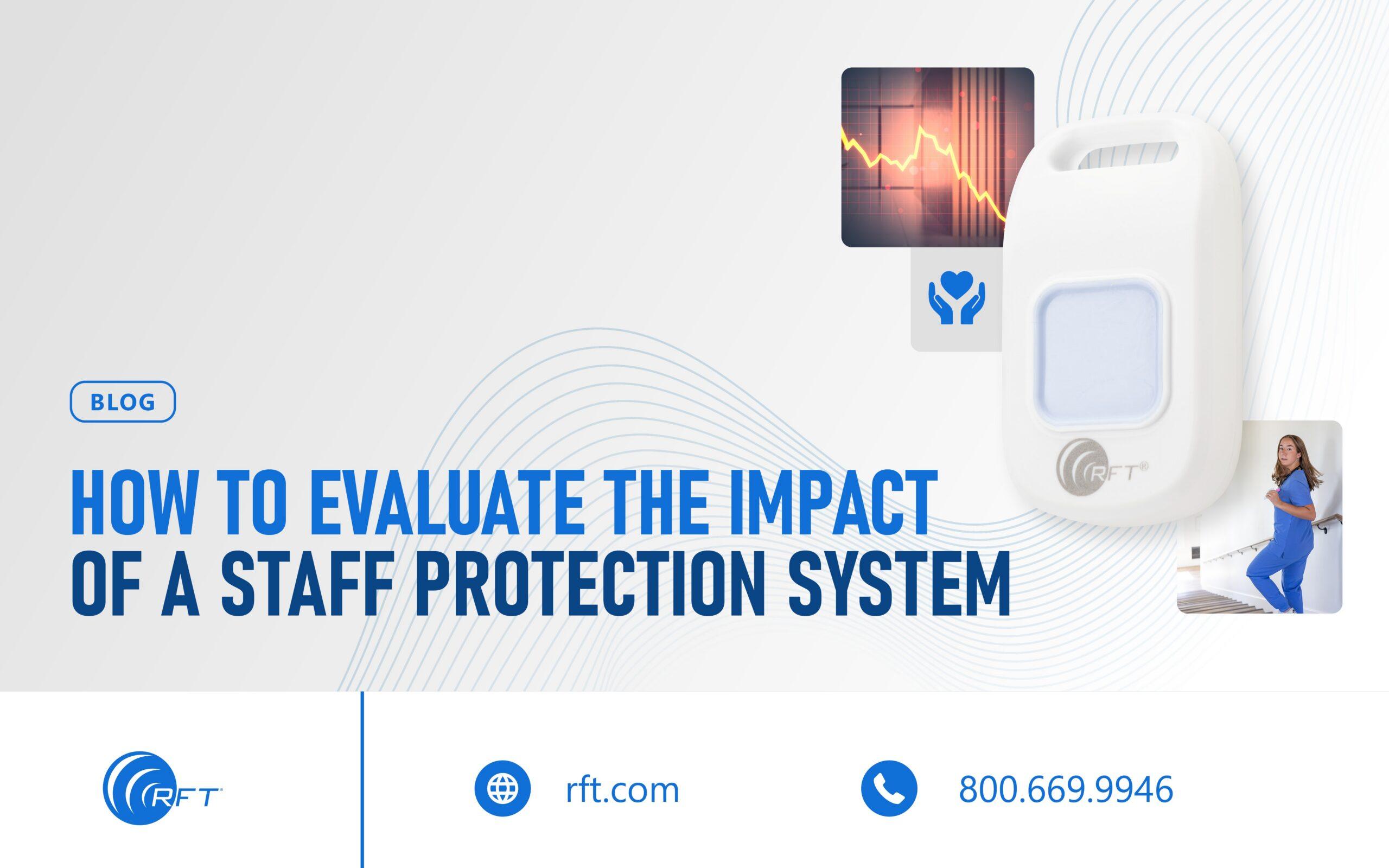
Help Alert® is RFT’s wearable staff duress solution, designed, engineered and built in the USA. It is built to help staff call for help quickly and discreetly, and to help responders find them.
- One Press To Protect™. A single press sends a silent alert with the staff member’s identity and real-time location.
- Confirmation. LED lights and gentle vibrations confirm the alert was sent and acknowledged.
- Location only when needed. Real-time location activates only when the button is pressed.
- No hospital Wi-Fi needed. Help Alert® runs on Bluetooth® long-range networks.
- Indoor and outdoor coverage. From patient rooms, hallways and stairwells to parking areas and garages.
- Wear options. The Help Alert® Badge, Help Alert® Pendant with a replaceable battery, and Fob with high- and low-priority buttons. A Lone Worker Pendant covers remote staff wherever a cellular connection is available.
- Integrations. Cameras, mobile radio, 911 and mobile security staff.
- Setup and support. Turnkey wireless installation, on-site go-live support and clinical education for staff. RFT also offers in-house financing through RFT Financial Services.
An ROI estimate helps make the case before a purchase. Once a system is live, the next step is checking that it performs as expected. Our guide on how to evaluate the impact of a staff protection system covers the metrics to track, from response time and location accuracy to staff adoption.
Run the Numbers for Your Facility
Enter the number of registered nurses at your facility and see an estimated return in seconds.
Try the Help Alert® ROI Calculator
FAQs
How do you calculate the ROI of a staff protection system?
Estimate the annual cost of workplace-violence-related turnover and injuries, estimate the share a system can address, and compare those savings with your annual safety investment. Net ROI % = (total annual savings − annual investment) ÷ annual investment × 100.
How much does it cost to replace a nurse?
RFT’s staff protection page puts nurse replacement at 40,000–60,000. The Help Alert® ROI Calculator uses $56,000 as an industry-average default, which you can replace with your own HR figure.
Does the Help Alert® ROI Calculator include indirect benefits?
No. It does not include benefits such as regulatory compliance, staff morale or patient experience. It also does not assume all nurses use the system or that all incidents are eliminated.
Does Help Alert® need hospital Wi-Fi?
No. Help Alert® runs on Bluetooth® long-range networks, so it does not rely on hospital Wi-Fi.